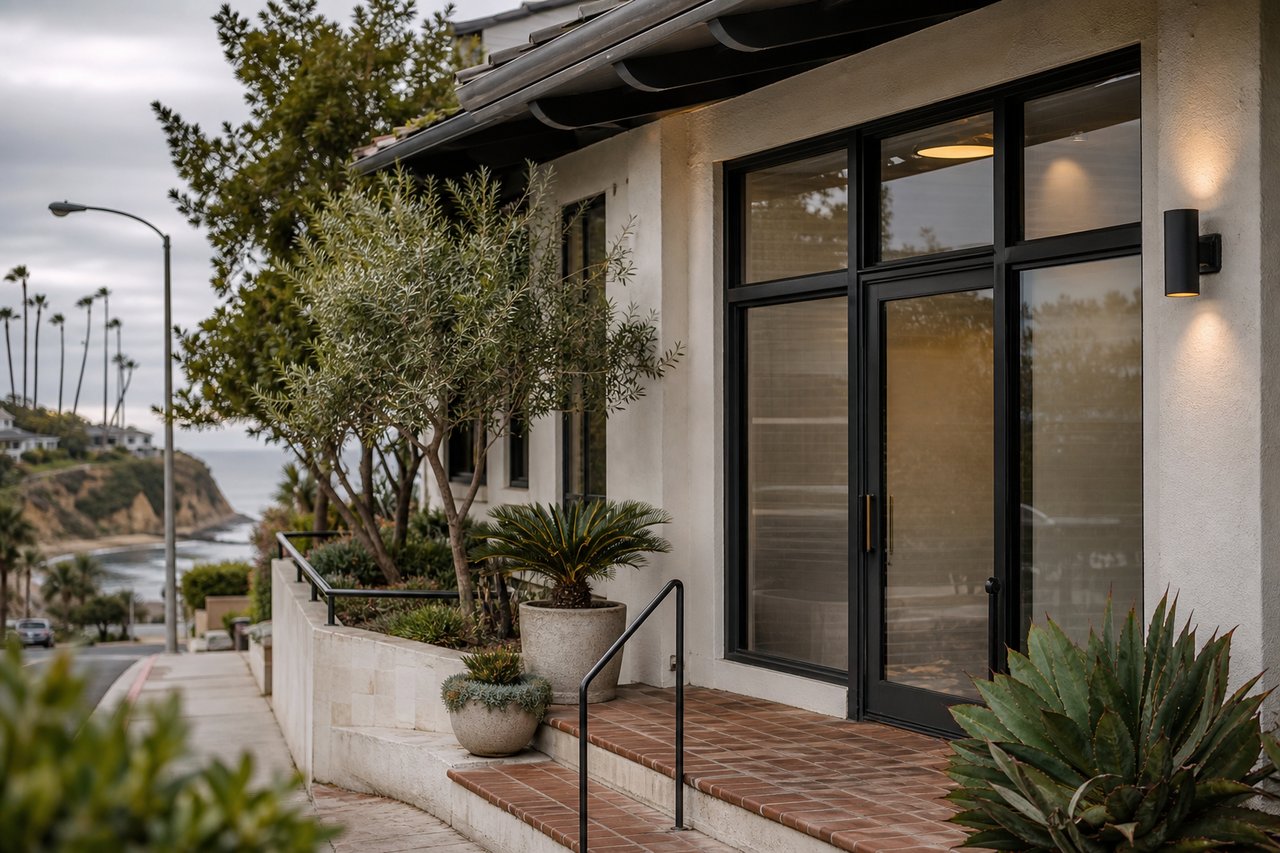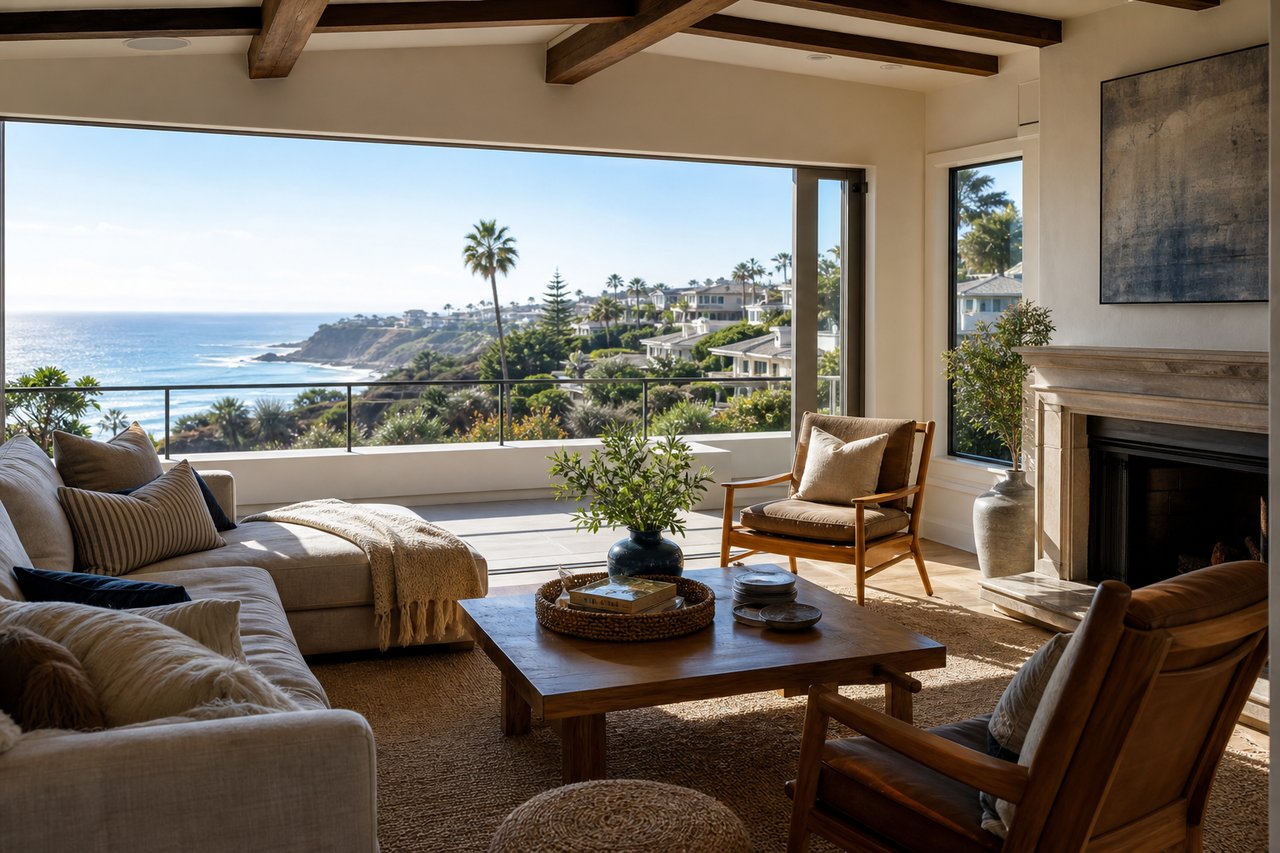
Is it better to sell or rent out my house in Dana Point?
For most Dana Point homeowners, the answer hinges on three things: how much equity you'd walk away with if you sold today, whether the rent you'd collect actually covers your carrying costs, and how long you're willing to be a landlord. With a median sale price near $1.9M and long-term rental rates for single-family homes ranging from roughly $4,500 to $12,000 or more per month depending on location and size, both paths can make financial sense, but the math is different for every property, and the decision is rarely as simple as it looks on paper.
Key Takeaways
- Recent local market data puts Dana Point's median sale price at $1,900,000, with homes selling in a median of 51 days, a market where sellers can still move quickly at strong prices.
- Single-family home rents in Dana Point range from roughly $4,500–$6,000 per month for a 2-bedroom up to $7,500–$12,000 for a 4-bedroom-plus, with oceanfront and Monarch Beach estates commanding substantially more.
- Carrying costs for a Dana Point rental, property taxes, insurance, HOA dues, maintenance, and property management fees, can be substantial on a high-value coastal property and must be weighed against gross rent before you decide.
- Short-term vacation rental listings in Dana Point grew roughly 8% year-over-year through September 2026, per AirDNA's Dana Point market overview, adding a third option for owners who don't want to commit to a long-term lease.
- California's landlord rules, including security deposit limits under Civil Code § 1950.5 and the state's tenant-protection statutes, apply to Dana Point rentals; understanding them before you list a tenant is non-negotiable.
What does the Dana Point market look like right now for sellers?
Selling into this market is not a bad idea. Recent local market data shows a median sale price of $1,900,000 and a median of 51 days on market across Dana Point, and that's the median, not the ceiling. Laguna Beach sits at $3,362,500 and San Clemente at $1,750,000, which tells you how Dana Point fits into the broader South Orange County coastal landscape.
Here's how the areas I cover compare right now:
Area | Median Sale Price | Median Days on Market |
|---|---|---|
Dana Point | $1,900,000 | 51 |
Laguna Beach | $3,362,500 | 42 |
Laguna Hills | $1,335,000 | 49 |
San Juan Capistrano | $1,300,000 | 41 |
San Clemente | $1,750,000 | 50 |
Data from Realatrends' Dana Point market page for August 2026 showed a median sale price around $2.18M, slightly above the trailing 90-day median in the current data, with days on market around 48 and active inventory in the low 100s. The same source tracked a home-value index moving from roughly $1.65M in August 2025 to about $1.74M by July 2026, suggesting mid-single-digit annual appreciation. The direction is still upward, though the pace has moderated from the sharper gains of prior years.
With 101 active listings and only 27 new listings added in the last 30 days, supply is relatively tight. That's a seller's environment. If you're sitting on a large equity position and your personal or financial situation has changed, this is a market where cashing out is a real option, not a fallback.
What about the speed of the market?
A February 2026 analysis from a South Orange County broker showed an expected market time of about 39 days for Dana Point, down sharply from roughly 171 days just a year earlier, with well-priced homes going pending in as few as 12 days. The current trailing data puts median days on market at 51, which reflects a slightly slower pace as we move into fall, but still a functional market. If your home is priced correctly for its condition and location, it will sell. That matters when you're weighing the certainty of a sale against the ongoing uncertainty of being a landlord.
What can you realistically rent your Dana Point home for?
This is where the numbers get interesting, and where a lot of owners are surprised by how strong the rental market actually is.
Based on Q2 2026 data from a Dana Point property management firm tracking long-term rental placements and portal data for the 92629 and 92624 ZIP codes, here's what the rental market looks like for single-family homes:
- 2-bedroom single-family: roughly $4,500–$6,000 per month
- 3-bedroom single-family: roughly $5,500–$8,000 per month
- 4-bedroom-plus single-family: roughly $7,500–$12,000 per month
- Oceanfront and Monarch Beach estates: substantially higher, often in the mid-five-figure monthly range for larger homes
For condos and townhomes, the same source shows:
- 1-bedroom: roughly $2,800–$3,400
- 2-bedroom: roughly $3,400–$4,500
- 3-bedroom: roughly $4,500–$6,000
- 4-bedroom-plus: roughly $5,500–$7,500
For context on the broader rental market, Rent.com's Dana Point rent trends page (covering apartments specifically) reported September 2026 averages of roughly $2,350 for studios, $3,908 for one-bedroom apartments, and $4,201 for two-bedroom apartments, with double-digit year-over-year increases for studios and one-bedrooms. That baseline demand is what makes a detached home or larger condo so attractive to renters: the apartment alternative is expensive, and a well-maintained house in a good location commands a real premium.
Does location within Dana Point change the rental picture?
Yes, significantly. Monarch Beach and oceanfront properties operate in a different tier entirely. The premium for a bluff-top or gated coastal location isn't just a few hundred dollars a month, it can push a 3-bedroom into the $9,000-plus range where comparable inland homes would be in the $5,500–$7,000 range. If you own one of those properties, the income potential is real. But so is the concentration of risk: a high-value home that sits vacant for even one month represents a much larger opportunity cost than a mid-tier rental.
Interior and non-oceanfront neighborhoods still sit well above national rental averages, but they're "mid-market" by South Orange County coastal standards. That's not a knock, it means there's a deeper pool of qualified tenants who can afford them, which tends to reduce vacancy.
If you're curious how your specific property fits into the current investment landscape along the coast, my post on Dana Point waterfront homes covers the premium tiers in more depth.
What carrying costs will eat into that rental income?
Gross rent is not cash flow. This is the part of the sell-vs.-rent conversation that I walk every client through carefully, because the carrying costs on a Dana Point property can be substantial, and they don't pause when you have a vacancy.
The main categories to budget for as a Dana Point landlord:
- Property taxes: Orange County property taxes are based on your assessed value under Proposition 13, plus any voter-approved special assessments. On a home assessed near the current median, this is a meaningful annual number.
- Insurance: Standard homeowner's coverage is not enough once you have a tenant. You'll need landlord insurance and likely an umbrella liability policy. Coastal properties also carry elevated risk profiles that affect premiums.
- HOA dues: Many Dana Point properties, particularly in Monarch Beach and condo/townhome communities, carry HOA fees. These continue regardless of whether the unit is occupied, and some HOAs restrict or complicate rentals. Check your CC&Rs before you commit.
- Maintenance and repairs: Coastal environments are hard on buildings. Salt air, humidity, and sun exposure accelerate wear on exteriors, HVAC systems, and appliances. Budget conservatively.
- Property management: If you're not local or don't want to field 10pm calls about a broken water heater, a property manager is a real cost, but also a real service. Factor it in.
- Vacancy: Even in a strong market, units don't turn over seamlessly. Budget for at least some vacancy when you run your numbers.
The only way to know whether your specific property cash-flows positively, or how close to break-even you'd be, is to run the actual numbers against your current mortgage balance (if any), tax basis, and insurance situation. That's a conversation worth having with me before you make the call. Reach out and I'll walk through it with you.
What about short-term vacation rentals?
There's a third path that some Dana Point owners consider: listing the property as a short-term vacation rental rather than a long-term lease. AirDNA's September 2026 Dana Point market overview shows active short-term rental listings up about 8% year-over-year, with positive revenue-growth indicators, reflecting the strength of tourism demand near the harbor, beaches, and resorts.
The income potential on a well-located short-term rental can exceed a long-term lease, especially for oceanfront or harbor-view properties. But the management burden is higher, the income is less predictable, and Dana Point has specific permitting and compliance requirements for short-term rentals that you'll need to understand before you go that route. I'd point you to the city directly for current permit requirements rather than rely on anything printed here, since those rules can change.
California landlord law: what you need to know before you decide
Choosing to rent rather than sell means becoming a California landlord. That's not a reason to avoid it, but it's a commitment you should go in with open eyes.
California's residential security deposit rules are governed by Civil Code § 1950.5. As amended effective January 1, 2026 (AB 414), the statute sets rules on maximum deposit amounts, permitted uses, and return timelines, but, as confirmed by Landlord Atlas and RentFormulas, California does not require landlords to pay interest on residential security deposits statewide. Dana Point is not subject to local rent control or the deposit-interest rules that apply in cities like Los Angeles or San Francisco, so the statewide statute is what governs you.
Beyond deposits, California's tenant-protection statutes, including the Tenant Protection Act of 2019 (AB 1482), which established statewide just-cause eviction and rent-increase limits for many properties, affect how you can manage and exit a tenancy. Not every property is covered (single-family homes with proper written notice to tenants may be exempt under certain conditions), but you need to know where your property stands before you sign a lease. The California Department of Real Estate and the California Courts self-help landlord-tenant resource are good starting points.
The practical upshot: renting in California is manageable, but it's not passive. The legal framework is tenant-friendly, and getting into a bad tenancy is much easier than getting out of one. A good property manager who knows California law is worth every dollar of their fee.
So which path is right for you?
Here's how I frame it with clients who ask me this question. Selling makes more sense when you need the equity now, when the property doesn't cash-flow cleanly after carrying costs, or when you simply don't want the responsibilities of being a landlord. Renting makes more sense when you have a long time horizon, the rent genuinely covers your costs with room to spare, and you believe Dana Point's appreciation story has more runway.
The appreciation case is real. The rental income case is real. But neither of them is an automatic win, it depends entirely on your specific property, your mortgage situation, your tax basis, and your goals. Every situation is different, and the only way to know for sure is to run the actual numbers with someone who knows this market.
If you're weighing this decision for a property in Dana Point, Laguna Beach, San Clemente, San Juan Capistrano, or Laguna Hills, I'm happy to sit down and work through it with you. Schedule a conversation here, or get a sense of where your home sits in today's market with a home valuation.
You can also read what past clients have to say about working with me on Zillow.
FAQ
How much rent can I realistically get for a 3-bedroom house in Dana Point?
A 3-bedroom single-family home in Dana Point typically rents for roughly $5,500–$8,000 per month in a standard interior neighborhood, based on Q2 2026 property management data for the area. Oceanfront and Monarch Beach properties in the same bedroom count can command significantly more, often $9,000 or above, while condos and townhomes at 3 bedrooms generally fall in the $4,500–$6,000 range. Your specific number depends on condition, location within Dana Point, and current vacancy in your sub-market.
Are Dana Point home prices still rising in 2026, or has the market cooled?
Prices are still moving upward, but the pace has moderated. Realatrends' August 2026 data showed a median sale price around $2.18M, up roughly 7–8% year-over-year, with a home-value index reflecting mid-single-digit annual appreciation. Recent local market data puts the trailing 90-day median at $1,900,000 with 51 median days on market, a functional, active market, but not the frenzied pace of 2021–2022. Well-priced homes are still selling within a reasonable window.
What are the typical carrying costs if I keep my Dana Point property as a rental?
The main categories are property taxes (based on your Orange County assessed value), landlord insurance and umbrella liability coverage, HOA dues if your property is in a planned community, ongoing maintenance (coastal properties face accelerated wear from salt air and sun), property management fees if you use a manager, and vacancy. The total burden on a high-value Dana Point property can be substantial, which is why gross rent and net cash flow are two very different numbers. I walk clients through this analysis before they commit to either path.
What's the difference between long-term and short-term rental income potential in Dana Point?
Short-term vacation rentals can generate higher gross income than long-term leases for well-located properties, particularly near the harbor or with ocean views. AirDNA's September 2026 overview shows active short-term listings up about 8% year-over-year with positive revenue growth. The trade-off is higher management intensity, less income predictability, and city-specific permitting requirements that long-term rentals don't carry. Long-term leases offer more stability and lower overhead, which often makes the net difference smaller than the gross numbers suggest.
What California landlord laws apply if I rent out my Dana Point home?
California's Civil Code § 1950.5 governs residential security deposits statewide, setting rules on maximum amounts, permitted uses, and return timelines, and as of January 1, 2026, there is no statewide requirement to pay interest on deposits. Dana Point is not subject to local rent control, so the statewide rules apply. The Tenant Protection Act of 2019 (AB 1482) may also affect your property depending on its type and age, covering just-cause eviction and rent-increase limits for many California rentals. Consulting a California-licensed property manager or real estate attorney before signing a lease is a smart step.
Equal Housing Opportunity. Coldwell Banker Residential | CA DRE# 00616212. Affiliated real estate agents are independent contractor sales associates, not employees. California Department of Real Estate (DRE) licensee CA DRE# 01814437. This article is general information only and is not legal, tax, or financial advice. Confirm your own numbers with your closing agent, tax advisor, or lender.