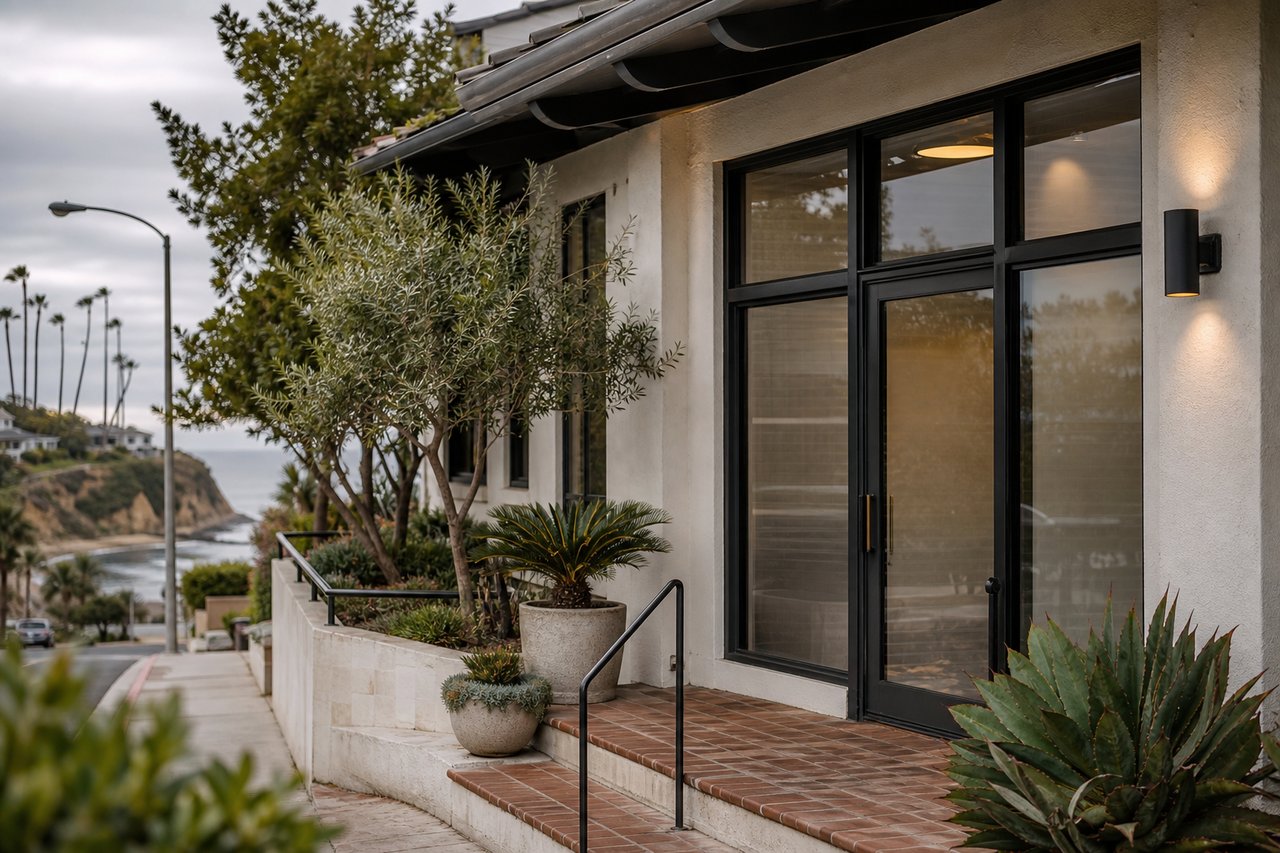
What are the benefits of a mortgage-free retirement with a Dana Point home?
Owning a Dana Point home outright in retirement eliminates your largest recurring housing expense, reduces the income you need to stay in place, and preserves meaningful equity for future options, whether that's a strategic downsize, a reverse mortgage, or simply the freedom to stay put without financial pressure. Combined with California's Proposition 13 assessment limits, long-held coastal property can be one of the most stable financial foundations a retiree can hold.
Key Takeaways
- The median sale price in Dana Point reached $2,022,500 in recent local market data, meaning a paid-off home here represents substantial equity that can anchor a retirement plan.
- Proposition 13 limits how fast your assessed value, and therefore your property-tax bill, can grow each year, making long-held ownership more budget-predictable than renting or buying new in retirement.
- A Home Equity Conversion Mortgage (HECM) is generally available to homeowners 62 or older who own their home outright or carry a low balance, according to the Consumer Financial Protection Bureau, a mortgage-free Dana Point home positions you well for this option if you ever need it.
- Mortgage-free does not mean cost-free: property taxes, insurance, HOA dues, maintenance, and healthcare costs still require a real retirement budget.
- Selling and buying elsewhere triggers a reassessable change in ownership, potentially resetting your property-tax base to current market value, a significant consideration before deciding to relocate.
How does paying off your Dana Point home change your retirement cash flow?
The most immediate benefit is the one you feel every month: the mortgage payment disappears. For a Dana Point home at current market values, that can mean a substantial line item removed from your budget entirely. What replaces it is a much shorter list of predictable ownership costs.
Mortgage-free does not mean cost-free, though. I always make sure my clients are clear on this before they assume the math is simple. A realistic retirement budget for a Dana Point homeowner still needs to account for:
- Property taxes (more on Prop 13 below)
- Homeowners insurance, which has shifted in coastal California markets
- HOA dues, where applicable, many Dana Point communities carry them
- Utilities and routine maintenance
- Capital repairs, roofs, HVAC, plumbing don't check your retirement status before failing
- Healthcare and care-related costs, which tend to grow over time
None of those are reasons to avoid mortgage-free ownership. They're reasons to plan for it honestly. The freedom that comes with eliminating a principal-and-interest payment is real, it's just not the whole picture.
How Proposition 13 makes long-held ownership more predictable
Here's where a Dana Point home held for years, or decades, carries a specific advantage that most people underestimate. Under California's Proposition 13, your property's taxable value generally starts from a factored base-year value and is subject to the state's constitutional assessment rules, rather than resetting to current market value each year. That means a homeowner who bought in Dana Point years ago is likely paying taxes on an assessed value well below today's $2,022,500 area median, and that gap grows more valuable every year you stay.
This is one of the most underappreciated retirement assets a long-term California homeowner holds. Your neighbor who just bought pays taxes on today's market value. You don't. That predictability is worth something real in a fixed-income retirement budget.
The flip side: a reassessable change in ownership establishes a new base-year value equal to the property's market value at transfer. If you sell and buy elsewhere, even in the same county, you're likely starting over at today's prices. That's a calculation worth running carefully before you decide to move.
What equity options does a mortgage-free Dana Point home open up in retirement?
Owning your home outright doesn't lock the equity away. It actually expands your options, because you're not constrained by an existing lender's position. Here are the three paths I walk through most often with clients in this situation.
Option 1: Stay and use the equity as a cushion
For many retirees, the most valuable thing about a paid-off Dana Point home is simply the security of knowing it's there. You're not drawing on it, you're living in it, with lower monthly obligations and the knowledge that substantial equity exists if circumstances change. That peace of mind has real financial value, even if it never shows up on a balance sheet.
Option 2: Downsize and convert equity to cash
If your home is larger than you need, selling and moving to a smaller property, in Dana Point, Laguna Hills, San Juan Capistrano, or San Clemente, can free up a meaningful portion of your equity while keeping you in the region you know. The table below shows current area medians, which illustrates the spread in values across the communities I serve:
Area | Median Sale Price | Median Days on Market |
|---|---|---|
Dana Point | $2,022,500 | 51 |
Laguna Beach | $3,412,500 | 49 |
Laguna Hills | $1,280,000 | 47 |
San Juan Capistrano | $1,337,500 | 43 |
San Clemente | $1,775,000 | 48 |
Downsizing isn't a step down, done right, it's a deliberate upgrade to a lifestyle that actually fits where you are now. I've written more about how that decision plays out locally in my post on luxury downsizing in Dana Point. The key is running the full comparison: sale proceeds, replacement cost, and the property-tax reassessment picture all need to be part of the conversation before you decide.
Option 3: Access equity without selling, through a reverse mortgage
A Home Equity Conversion Mortgage (HECM), the most common type of reverse mortgage and federally insured, is generally available to homeowners who are at least 62, occupy the home as their principal residence, and either own it outright or carry a low remaining mortgage balance. A paid-off Dana Point home puts you in the strongest position to qualify.
That said, a reverse mortgage is not the same as retirement income from a portfolio. According to HUD, HECM proceeds can supplement income, but borrowers remain responsible for occupying the property as a principal residence and meeting applicable property-related obligations. The loan generally becomes repayable when the borrower dies or no longer occupies the home as a principal residence. It affects your equity, your heirs, and your estate, those are real considerations. Talk to a qualified financial advisor and your lender before going this route, not just a reverse-mortgage originator.
The amount available through a HECM depends on your age, the property's characteristics, current interest rates, and program rules, there's no single number I can give you here. What I can tell you is that a mortgage-free Dana Point home, at current market values, gives you a strong equity position to start that conversation from.
What about selling entirely and buying in cash elsewhere?
Some clients ask whether it makes more sense to sell the Dana Point home, pocket the equity, and buy somewhere less expensive outright. That's a legitimate strategy, and I've seen it work well, but the property-tax picture is the variable most people miss. If your current assessed value is well below market (thanks to years of Prop 13 protection), you're giving up a tax advantage that can't be recovered once you sell. Factor that into the comparison before you decide the numbers favor a move.
I covered the cash-purchase side of this in more detail in how much cash it takes to buy a home in Dana Point, worth a read if you're thinking through the buy-elsewhere scenario.
If you're weighing whether to sell or hold, the decision depends on your specific equity position, your replacement housing costs, your tax basis, and what your retirement income actually needs to look like. That's exactly the kind of analysis I work through with clients before they commit to anything.
If you'd like to read what other clients have said about working through these decisions, you can find Rhonda's reviews on Zillow.
Frequently Asked Questions
Can I retire comfortably in Dana Point if my home is paid off?
A paid-off Dana Point home removes your largest housing cost and reduces the income you need to stay in place, which can make a significant difference in retirement comfort. You'll still need to budget for property taxes, insurance, HOA dues, maintenance, and healthcare, but with no mortgage payment, those costs are far more manageable on a fixed income. Whether it's enough depends on your full financial picture, including other income sources and savings.
Does owning my Dana Point home outright affect my property taxes?
Paying off your mortgage has no direct effect on your property-tax assessment, your taxes are based on your assessed value, not your loan balance. What matters for long-term tax predictability is how long you've owned the home: under Proposition 13, your taxable value is tied to a factored base-year value rather than current market value, so a home held for many years is likely assessed well below today's prices. Selling and buying elsewhere would generally trigger a reassessment to current market value.
Should I stay in my paid-off Dana Point home or downsize?
There's no universal right answer, it depends on whether the home still fits your life, what your ongoing ownership costs look like, and what you'd net after a sale compared to what replacement housing would cost. A key factor many people overlook is the Proposition 13 tax advantage: if your current assessed value is well below market, selling means starting over at today's prices. I walk clients through this comparison in detail before they make any decisions.
Can I use a reverse mortgage on my Dana Point home to fund retirement?
Yes, if you're 62 or older, occupy the home as your primary residence, and own it outright or carry a low balance, you may be eligible for a federally insured HECM. The proceeds can supplement retirement income, but the loan becomes repayable when you die or permanently leave the home, and you remain responsible for property-related obligations throughout. Talk to a HUD-approved housing counselor and a financial advisor before deciding, this affects your equity and your estate.
What happens to my Dana Point home and reverse-mortgage balance when I die?
When a HECM borrower dies or no longer occupies the home as a principal residence, the loan generally becomes due and repayable, according to HUD. Heirs typically have options: they can repay the balance and keep the home, sell the home to satisfy the loan, or allow the lender to take the property. The specifics depend on the loan terms, the home's value at that time, and how the estate is structured, your estate attorney and financial advisor should be part of that planning conversation well in advance.
A paid-off Dana Point home is one of the most powerful financial assets you can carry into retirement, but getting the most from it means making deliberate choices about how and when to use it. Whether you're staying put, considering a downsize, or exploring equity options, I'm here to help you run the numbers and think through the full picture.
Schedule a consultation and let's talk through what your Dana Point home means for your retirement plan. Or start with a home valuation to understand what you're working with.
This article is general information only and does not constitute legal, tax, or financial advice. Consult your closing agent, tax advisor, or lender to confirm figures for your specific situation. Equal Housing Opportunity. Coldwell Banker Residential | CA DRE# 00616212. Affiliated real estate agents are independent contractor sales associates, not employees. California Department of Real Estate (DRE) | CA DRE# 01814437.