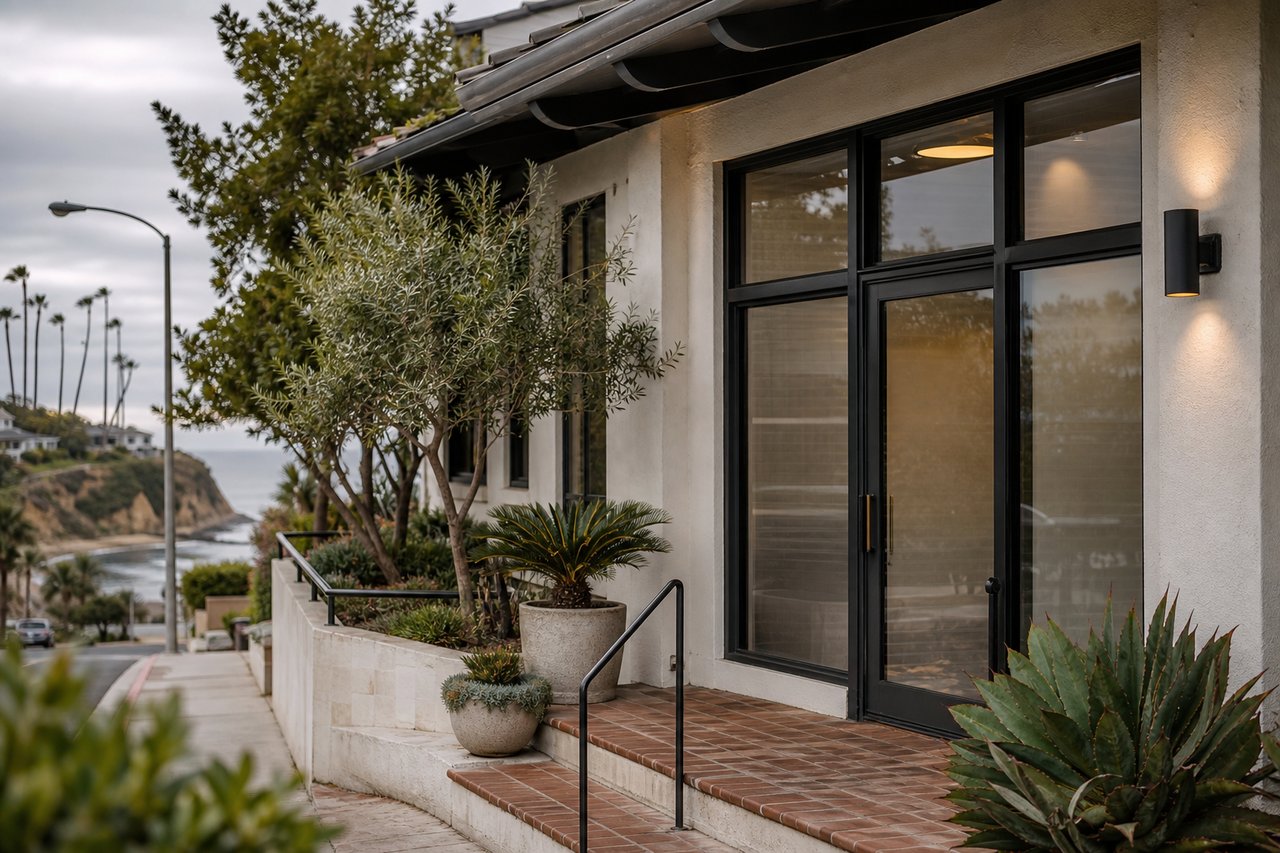
Is Dana Point real estate a good investment in 2026?
Dana Point real estate for investors offers a compelling combination of coastal scarcity, strong long-term appreciation, and genuine vacation-rental demand, but the city's short-term-rental permit system, including a hard cap of 60 permits for non-primary investor-owned properties, means the investment model has to be verified at the address level before you underwrite a single dollar of income. The right strategy depends on the specific property, its permit eligibility, and whether you're building for cash flow, appreciation, or both.
Key Takeaways
- The median sale price in Dana Point reached $2,005,000 in recent local market data (trailing 90 days, as of September 2026), reflecting the premium coastal buyers and investors consistently place on this market.
- The City of Dana Point caps non-primary short-term-rental permits at 60 citywide, making permit availability a critical due-diligence item for any investor-owned vacation-rental strategy.
- Dana Point's short-term-rental rules apply both inside and outside the Coastal Zone, moving just outside the coastal overlay does not eliminate the city's permitting requirements.
- The city's permit application requires a minimum stay of two consecutive nights, which must be factored into any revenue model.
- Across the South Orange County coastal corridor, median sale prices range from $1,280,000 in Laguna Hills to $3,362,500 in Laguna Beach, giving investors multiple entry points with different risk and return profiles.
What makes Dana Point attractive for property investment?
Dana Point real estate for investors starts with one fundamental advantage: you can't build more coastline. The city sits between Laguna Beach and San Clemente on one of Southern California's most accessible stretches of Pacific coast, and that geographic constraint has supported property values through multiple market cycles.
Recent local market data puts the median sale price at $2,005,000, with homes spending a median of 50 days on market and 118 homes closing in the trailing 90 days. That's a market with real transaction velocity, not a thin, illiquid market where you'd struggle to exit a position.
The ongoing Dana Point Harbor revitalization adds a layer of long-term demand that many investors haven't fully priced in. The harbor redevelopment brings new retail, dining, and marine amenities that strengthen the city's appeal as a destination, which matters whether you're targeting vacation-rental guests or long-term tenants who want a walkable coastal lifestyle.
For investors weighing the broader South Orange County corridor, the area comparison below shows where Dana Point sits relative to neighboring markets:
Area | Median Sale Price | Median Days on Market |
|---|---|---|
Dana Point | $2,005,000 | 50 |
Laguna Beach | $3,362,500 | 50 |
Laguna Hills | $1,280,000 | 48 |
San Juan Capistrano | $1,375,000 | 43 |
San Clemente | $1,785,000 | 49 |
Each of these markets has a different investor profile. Dana Point and Laguna Beach carry coastal premiums and strong vacation-rental demand. San Juan Capistrano and Laguna Hills offer lower entry points with different rental dynamics. I work across all of these markets, and the right choice depends entirely on your investment goals and capital position, not just which city name sounds best.
If you're also weighing financing considerations, my post on buying in Dana Point with higher interest rates walks through how the rate environment affects investment math in this market specifically.
What do Dana Point investors need to know about short-term rentals?
This is where I spend the most time with investor clients, because the short-term-rental landscape in Dana Point is more regulated than most people expect, and getting it wrong before you close is an expensive lesson.
The permit system and its caps
Operating a short-term rental in Dana Point legally requires a city-issued short-term-rental permit. The city has established a cap of 115 permits in the Coastal Zone and 115 permits outside the Coastal Zone. Within those caps, there is a 60-permit sub-cap specifically for non-primary short-term rentals, meaning investor-owned properties where the owner does not live there as a primary residence.
That 60-unit sub-cap is the number every non-owner-occupant investor needs to understand. If those permits are fully allocated, a new buyer cannot simply obtain one. Permit availability, and whether an existing permit can transfer with the property or must be reapplied for, is a property-level question that has to be answered before you make an offer, not after.
Coastal Zone vs. non-Coastal Zone: it doesn't matter as much as you think
A common assumption I hear from investors is that buying just outside the Coastal Zone overlay eliminates the city's short-term-rental rules. That's not how it works. The city's regulations apply to properties both inside and outside the Coastal Zone. The distinction affects which permit pool applies, not whether you need a permit at all.
Minimum stay and revenue modeling
The city's short-term-rental permit application materials establish a minimum stay of two consecutive nights. That rules out one-night bookings entirely, which has a real impact on revenue projections. Any income model for a Dana Point vacation rental needs to be built around two-night minimums, and should separately account for vacancy, cleaning fees, platform fees, utilities, maintenance, insurance, and local property management costs.
According to NAR research, investor activity in coastal markets has increasingly focused on understanding local regulatory environments before acquisition, and Dana Point is a clear example of why that discipline matters.
Choosing the right investment model
A long-term rental, a furnished mid-term rental, and a permitted short-term rental are three different businesses with different cash flow profiles, management demands, and regulatory exposure. I always tell clients: model them separately. A property's proximity to the beach doesn't automatically make it a profitable short-term rental if the permit isn't available or the numbers don't pencil after expenses.
If you're already weighing whether to hold or exit a Dana Point property, my post on Sell or Rent Out My Dana Point House walks through the decision framework in detail.
What due diligence should investors complete before buying in Dana Point?
The coastal premium in Dana Point is real, and so are the property-specific risks that can undermine an investment thesis if you skip the right checks. Here's what I walk every investor client through before we move toward an offer:
- Permit eligibility: Confirm with the City of Dana Point whether the specific address is eligible for a short-term-rental permit, which pool it falls under, and whether any existing permit is transferable.
- HOA restrictions: Many Dana Point communities have homeowners associations with their own rental restrictions that layer on top of city rules. Read the CC&Rs before assuming any rental strategy is viable.
- Zoning and use verification: Confirm the property's zoning classification and any use restrictions with the city directly, not just from listing descriptions.
- Coastal and slope-related risks: Some Dana Point properties carry additional exposure from coastal erosion, bluff proximity, or slope instability. These affect insurance availability, premiums, and long-term resale.
- Insurance: Confirm coverage availability and actual premium costs for the specific address and intended use. Coastal and vacation-rental properties often carry higher premiums than a standard homeowner's policy.
- Scenario modeling: Run the investment under both a long-term rental scenario and a permitted short-term rental scenario. If the deal only works under the optimistic vacation-rental case, that's a risk flag worth examining carefully.
Every one of these items can affect whether a deal makes sense, and several of them can only be answered by checking the specific address, not the neighborhood generally. That's where having a local agent with deep market knowledge and the right network of lenders, inspectors, and title professionals makes a real difference. Your specific numbers depend on the property, its condition, its permit status, and your capital structure, that's exactly the kind of analysis I walk investment clients through before we make a move.
If you've found this helpful, I'd invite you to read what other clients have said about working with me on Zillow.
Frequently Asked Questions
Is Dana Point a good place to buy an investment property in 2026?
Dana Point is a well-established coastal market with a median sale price of $2,005,000 and consistent transaction activity, which supports long-term appreciation as a core investment thesis. Cash flow potential exists through both long-term and short-term rentals, but the short-term-rental permit system, including a 60-permit sub-cap for non-primary investor-owned properties, means the viability of a vacation-rental strategy has to be confirmed at the property level before you buy.
Can I operate a short-term rental in Dana Point if I do not live there?
Yes, but it requires a city-issued permit and falls under the non-primary short-term-rental category, which carries a citywide sub-cap of 60 permits. If that sub-cap is fully allocated, a new investor cannot obtain a permit regardless of where the property is located. Verifying current permit availability with the City of Dana Point before making an offer is essential.
How difficult is it to get a Dana Point short-term-rental permit?
The difficulty depends on current permit availability within the applicable cap. The city limits permits to 115 in the Coastal Zone and 115 outside it, with a separate 60-permit sub-cap for non-primary rentals. When caps are near or at capacity, new permits may not be available, making an existing transferable permit a meaningful part of a property's value for investors targeting vacation-rental income.
What should investors verify before buying a Dana Point vacation rental?
Confirm permit eligibility and availability for the specific address, review HOA CC&Rs for rental restrictions, verify zoning with the city, assess coastal or slope-related risks, confirm insurance availability and premiums, and model the investment under both long-term and short-term rental scenarios. The city's minimum two-consecutive-night stay requirement also needs to be factored into any revenue projection.
Is Dana Point better suited to cash flow, appreciation, or a combination of both?
In my experience, most investors in this market are primarily buying for appreciation, with rental income as a meaningful secondary benefit rather than the sole justification. The coastal land constraint and ongoing harbor revitalization support long-term value, while a permitted short-term rental or quality long-term tenancy can offset carrying costs. Running both scenarios with realistic expense assumptions, not just gross rental income, gives you the clearest picture of what to expect.
Dana Point real estate for investors rewards the buyers who do the work upfront: verifying permit status, modeling multiple rental scenarios, and understanding the city's regulatory environment at the address level. If you're ready to evaluate a specific property or just want to understand what the numbers look like for your situation, let's schedule a conversation, I'll walk you through exactly what I'd look at before recommending a move in this market.
Equal Housing Opportunity. Coldwell Banker Residential | CA DRE# 00616212. Affiliated real estate agents are independent contractor sales associates, not employees. License regulated by the California Department of Real Estate (DRE). This article is general information only and is not legal, tax, or financial advice, confirm your own numbers with your closing agent, tax advisor, or lender.